
Chip-Tools
FBS4 engine ECU replacement with personalization data read from the original ECU (scenario 1)
Mercedes
Interface New
Keys / Immo
Medium
⏱ 60-90 min
8 steps
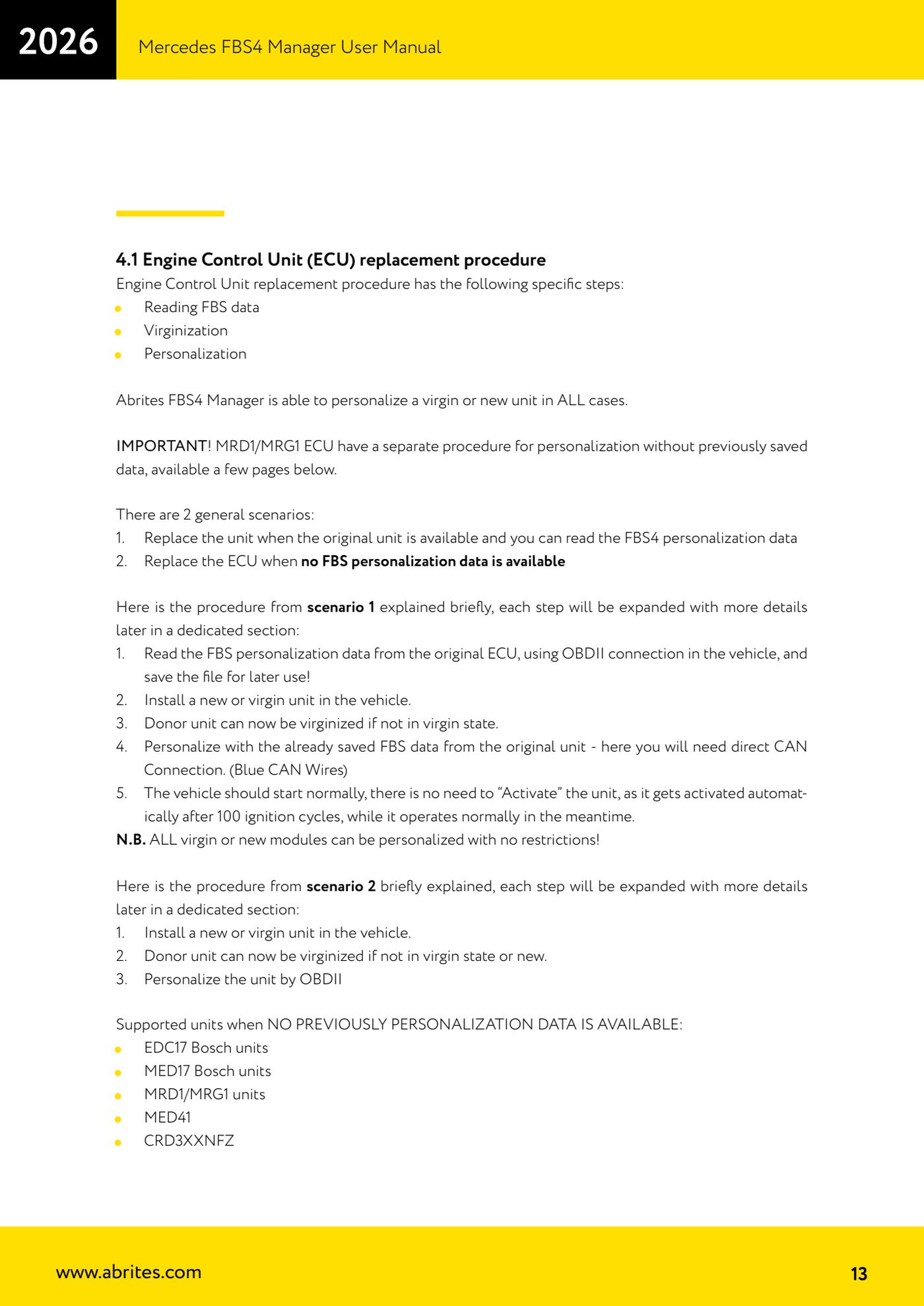
This is the procedure to use when the original engine ECU can still be read: you save the FBS4 personalization data from the original and transfer it to the replacement ECU, so the vehicle starts normally. It is always the preferred method over personalization without data.
⚠ WarningNOTE: MRD1/MRG1 ECUs have a separate procedure for personalization without saved data. During personalization, when the new screen appears after the connection is made, you must select the "standard" option.
Procedure
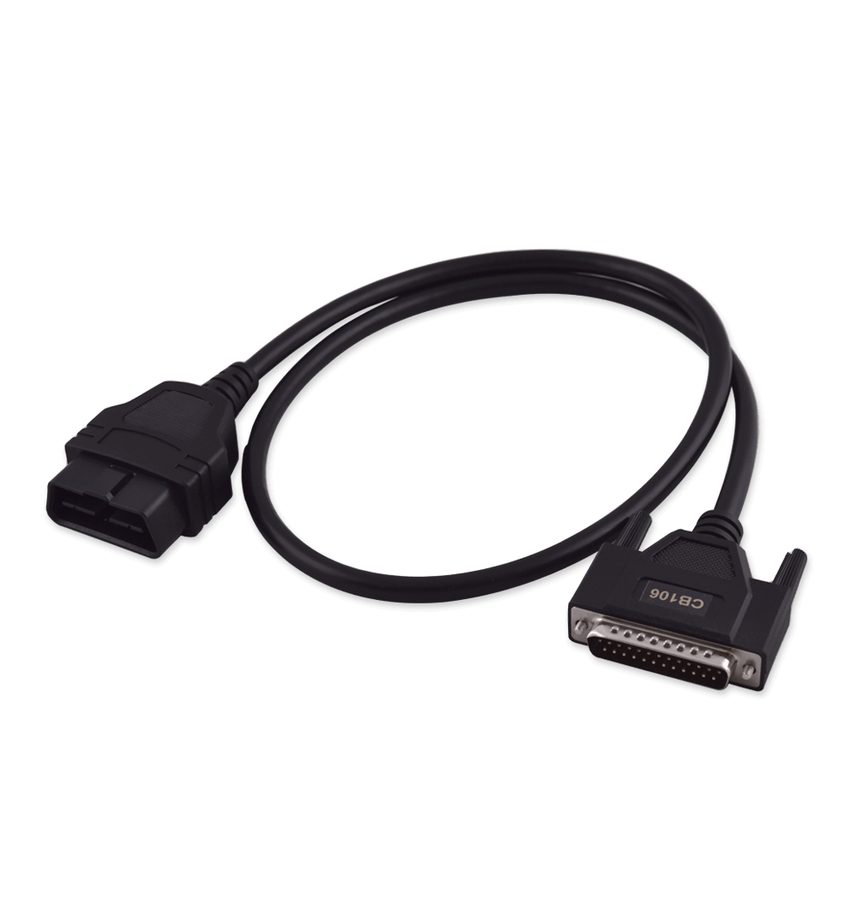
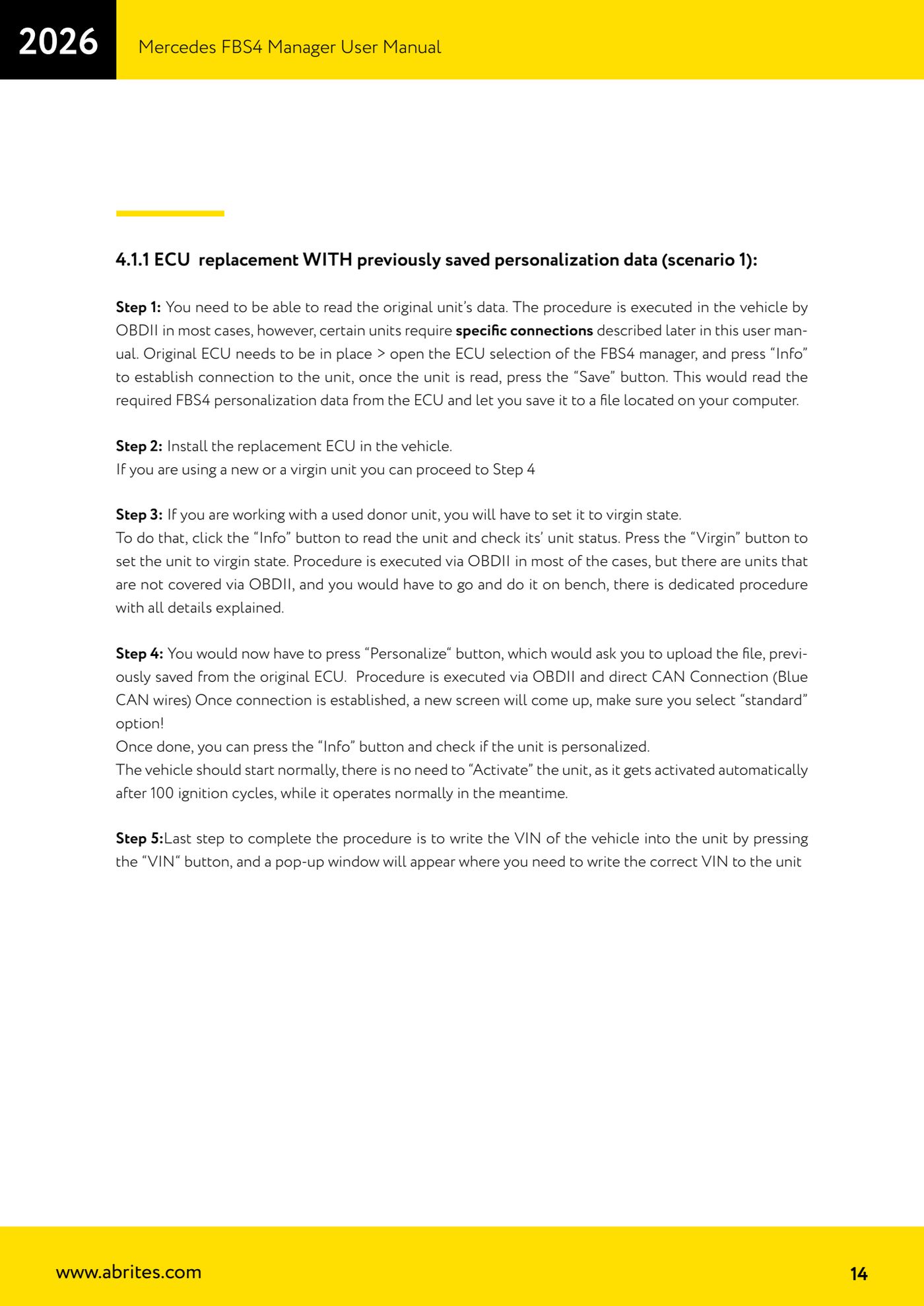
- With the original ECU still fitted to the vehicle, connect the AVDI over OBDII (CB106) and open the Mercedes FBS4 Manager.
- Select the ECU section and press "Info" to establish the connection and read the unit; check the status reported.
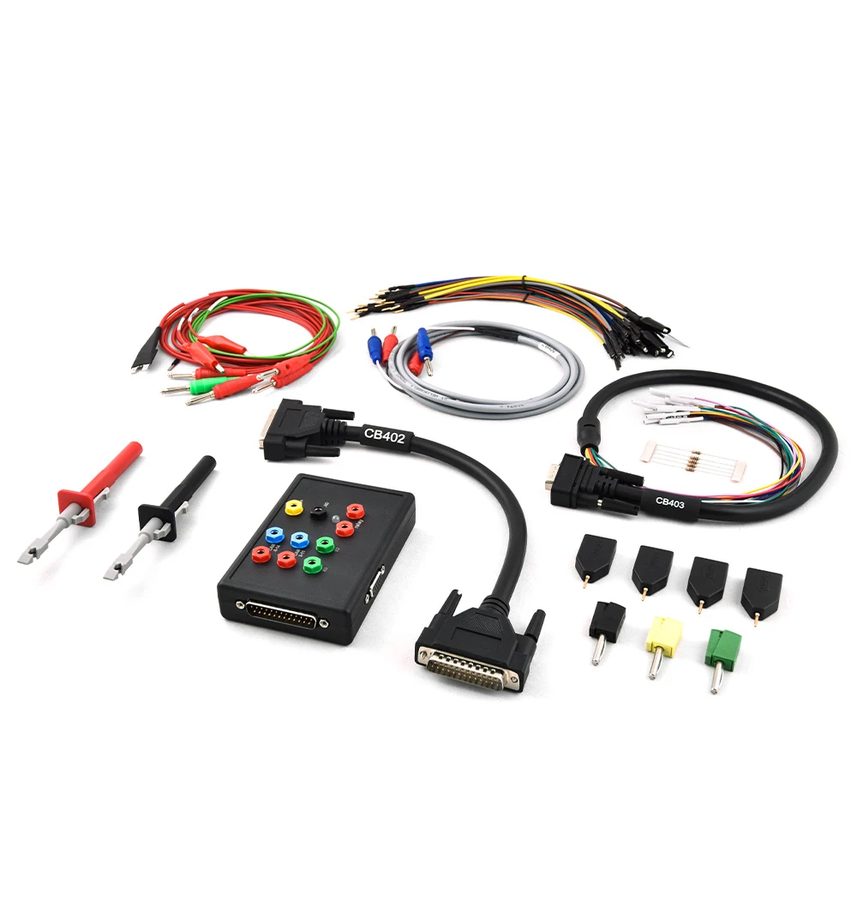
- Press "Save": the software reads the FBS4 personalization data and lets you save the file on the PC. Keep this file, it is essential for step 6. (Some units cannot be read over OBDII and require the dedicated bench connections described in the manual).
- Fit the replacement ECU to the vehicle. If it is new or already virgin, skip straight to step 6.
- If you are using a used donor ECU, press "Info" to read it and check its status, then press "Virgin" to bring it to virgin state. In most cases this is done over OBDII; some units are not covered over OBDII and have to be virginized on the bench.
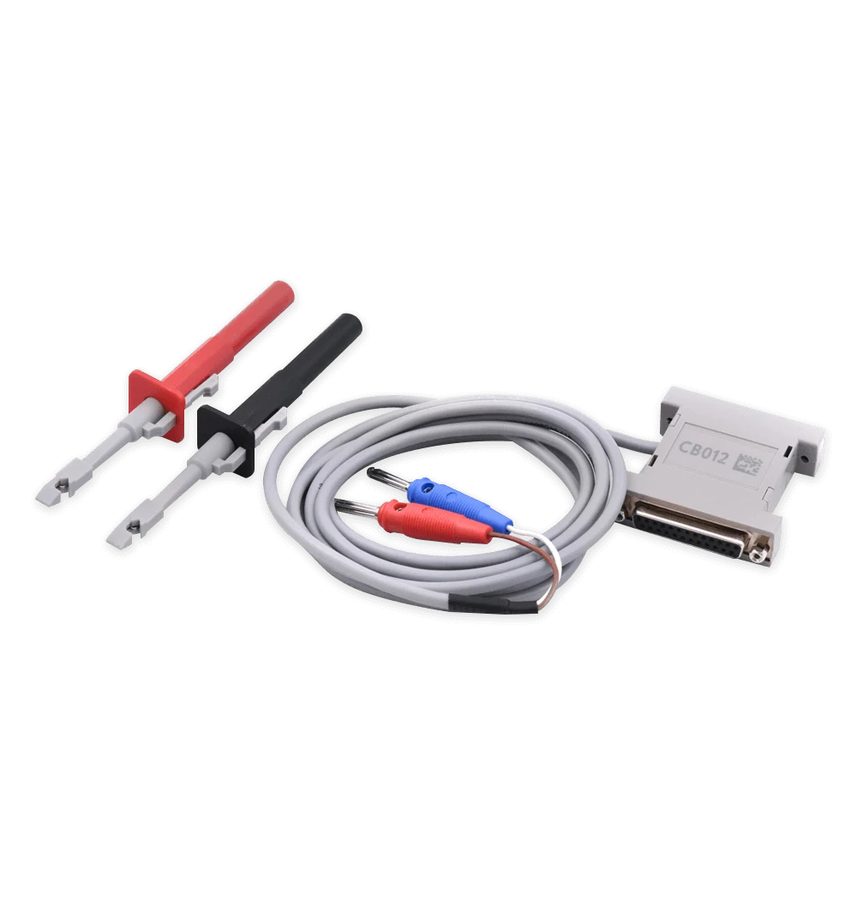
- Press "Personalize" and load the file saved at step 3. The procedure needs OBDII plus a direct CAN connection (blue CAN wires, CB012 cable or ZN051 DS Box). When the new screen appears, select the "standard" option.
- When the procedure finishes press "Info" again and check the unit reports as personalized. The vehicle must start normally: "Activate" is not needed, because the unit activates itself after 100 ignition cycles while running normally in the meantime.
- Last step: press the "VIN" button, type the vehicle's correct VIN in the window that opens and confirm writing it to the unit.
Reference screenshots
Source: Manuale Mercedes FBS4 Manager, parte 1 di 2, cap. 4.1 e 4.1.1 (p.13-14) · ⏱ estimated time 60-90 min
← All Abrites guides Hardware catalogue
More guides Mercedes
- Diagnostics and vehicle selection (VIN, chassis, over 1300 modules)
- Mercedes-Benz bus and truck diagnostics
- Mercedes Coding (VMAX, side sensors, parameters)
- Mercedes ECU Flashing (CFF files)
- Mercedes FBS4 Manager (722.9 and CRD3 renew, VIN change)
- Smart Functions (DPF mileage reset, DPF ash, VIM, seat belt alarm, sun roof, 360° cameras)
- FBS4 odometer correction with MN030 + emulators (EM008/EM014/EM018)
- Exhaust flaps — exhaust valve control
- CPC Torque limiter — torque limit
- VMax calibration — speed limiter
- Speed Limit Calibration — eVito 447 (electric)
- Mercedes AdBlue Reset: resetting the AdBlue system after component replacement or the remaining mileage warning